


You’ve set up your homestay, your rooms are ready, and your photos look decent. Now the question: where do you list?
The answer isn’t one platform — it’s a combination. Each booking website reaches a different audience, charges a different commission, and works better for different property types. A 2-room homestay in Manali has different listing needs than a 15-room hotel in Jaipur or a beach villa in Goa.
This guide compares the major platforms available to Indian hosts in 2026 — their commissions, who they bring to your door, and which combination actually makes sense for your property.
The quick comparison
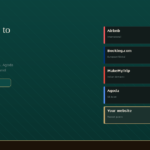
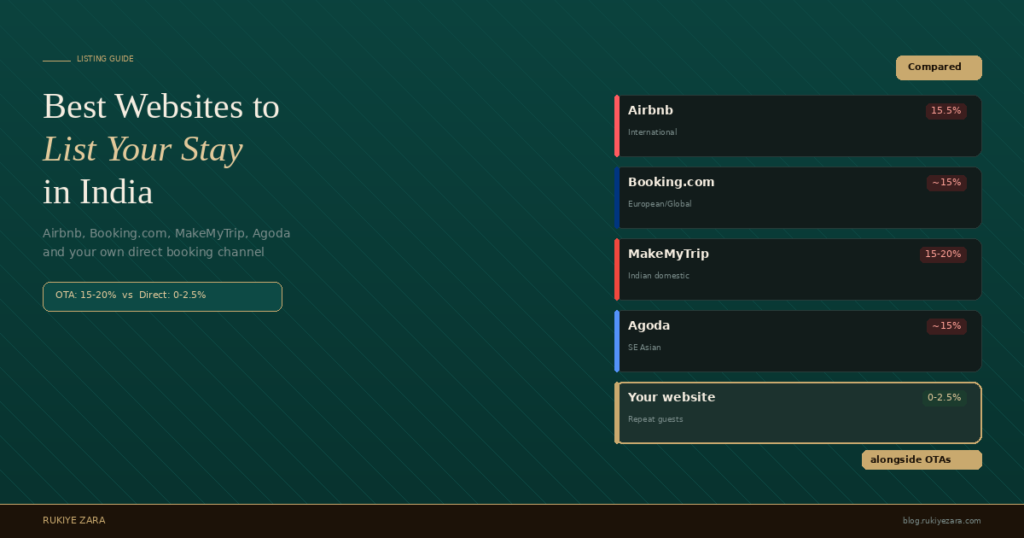
| Platform | Commission | Best audience | Best for |
|---|---|---|---|
| Airbnb | 15.5% commission | International tourists, experience-seekers, millennials | Homestays, unique stays, 1–10 rooms |
| Booking.com | ~15% (base) | European & global travellers, business trips | Hotels, guesthouses, all sizes |
| MakeMyTrip / Goibibo | 15–20% | Indian domestic travellers, weekend trips | All Indian properties, especially Tier 2/3 cities |
| Agoda | ~15% | Southeast Asian travellers, mobile-first bookers | Properties in tourist hotspots, international traffic |
| Your own website | 0–2.5% | Repeat guests, referrals, WhatsApp/Google inquiries | Every property — alongside OTAs |
Platform-by-platform breakdown
Airbnb
15.5% commissionAirbnb is still the strongest platform for homestays and unique stays in India. Its audience skews towards international tourists, younger travellers, and experience-seekers — people who want to stay in someone’s home, not a hotel room.
Commission: Airbnb charges hosts a flat 15.5% commission on every booking. This is deducted from your payout before you receive it. On a ₹5,000/night booking, that’s ₹775 per night going to Airbnb.
Who it brings: International tourists (especially from the US, UK, Europe, and Australia), Indian millennials looking for unique experiences, couples and solo travellers. Strong in destinations like Goa, Himachal, Uttarakhand, Rajasthan, and Kerala.
Works well for
- Homestays, villas, unique properties
- Properties with strong visual appeal
- Hosts who invest in guest experience
- Global brand recognition and trust
Watch out for
- Guest service fee makes your price look higher
- Guest contact info is restricted
- Listing can be suspended without warning
- Weaker for domestic Indian traffic vs. MMT
Booking.com
~15% commissionBooking.com is the world’s largest accommodation platform, and it works for everything — hotels, homestays, apartments, hostels. Its Indian presence has grown steadily, especially for properties that attract international guests or business travellers.
Commission: Approximately 15% of the booking value, deducted before payout. The rate varies by region and property type — check your Extranet for your actual rate. Opting into visibility programmes like Preferred Partner or Genius can push the effective rate higher.
Who it brings: European tourists, business travellers, and increasingly, Indian domestic travellers. Strong in cities (Delhi, Mumbai, Bangalore, Jaipur) and popular tourist destinations. The “Pay at Property” option is unique — guests pay when they arrive, which some hosts prefer.
Works well for
- All property types, including larger hotels
- Attracting European and international guests
- Business travel bookings
- Pay-at-property cash flow
Watch out for
- Visibility programmes eat into margins
- Cancellation policies can be lenient for guests
- Less “homestay culture” than Airbnb
- Dashboard can feel complex for small hosts
MakeMyTrip / Goibibo
15–20% commissionIf you’re targeting Indian domestic travellers — and you should be — MakeMyTrip and Goibibo are non-negotiable. They dominate the Indian online travel market, especially for weekend getaways, family trips, and package holidays. One listing on their Connect platform appears on both sites.
Commission: Typically 15–20% of the booking value. Rates vary based on your agreement, city, and property type. There have been well-publicised disputes between hotel associations and MakeMyTrip over commission rates — the platform’s commission structure has been a sore point for many Indian hoteliers.
Who it brings: Indian families, couples on weekend trips, corporate travellers, and package holiday buyers. Strong across all Indian cities, especially Tier 2 and Tier 3 destinations where international platforms have less reach.
Works well for
- Reaching Indian domestic travellers
- Properties in Tier 2/3 tourist cities
- Weekend getaway destinations
- Bundled with flights and trains
Watch out for
- Highest commission rates among major OTAs
- Heavy discounting culture can pressure rates
- Guest contact info often limited
- Promotional costs add up on top of commission
Agoda
~15% commissionAgoda (part of Booking Holdings, the same parent company as Booking.com) has strong market share in Southeast Asia and is growing in India. It’s a mobile-first platform that appeals to price-sensitive travellers.
Commission: Similar to Booking.com — approximately 15% of booking value. Agoda’s self-signup process is quick — hosts report going live within 30 minutes of uploading photos and bank details.
Who it brings: Travellers from Malaysia, Singapore, Indonesia, Thailand, and increasingly Indian domestic travellers. It’s strongest in popular tourist destinations — Goa, Kerala, Rajasthan — where international traffic is high.
Works well for
- Tourist-heavy destinations with international footfall
- Properties already on Booking.com (similar setup)
- Reaching Southeast Asian travellers
- Fast, digital-first listing process
Watch out for
- Smaller Indian audience than MMT or Airbnb
- FHRAI has raised concerns about GST compliance
- Less useful for Tier 2/3 domestic destinations
- Not a primary discovery platform in India
Your own direct booking website
0–2.5% commissionThis isn’t a competing platform — it’s your own channel that works alongside every OTA. A direct booking website lets guests who already know you (repeat guests, referrals, WhatsApp inquiries, Google searchers) book without going through a platform that takes 15–20%.
Commission: Depends on your tool. Rukiye Zara’s Starter plan is free with 2.5% on website bookings. Growth (₹999/month) drops to 1.5%. Pro (₹2,599/month) is zero commission. Compare this to ₹750–1,000 per booking on OTAs for a ₹5,000/night stay.
Who it brings: It doesn’t discover new guests — that’s still the OTAs’ job. What it does is convert existing guests and inquiries into commission-free bookings. The guests who find you via WhatsApp, Google, Instagram, or word of mouth — they land here. Over time, 30–40% of bookings can shift to your direct channel.
Works well for
- Repeat guest bookings at zero or low commission
- Converting WhatsApp/Instagram inquiries
- Building your own brand and guest database
- Full control over pricing and policies
Watch out for
- Doesn’t bring new guests on its own
- Needs a channel manager if you’re on multiple OTAs
- Requires effort to redirect guests here
- Not a replacement for OTAs — it’s alongside them
What about OYO, Vrbo, and other platforms?
OYO is not a traditional listing platform. When you partner with OYO, they often take operational control — including pricing, branding, and sometimes staff management. This can work for budget hotels looking for guaranteed occupancy, but it removes your autonomy as a host. Most boutique homestay owners prefer maintaining their own brand.
Vrbo (owned by Expedia) has minimal presence in the Indian domestic market. It can bring some international family bookings for larger villas and vacation rentals, especially in Goa and Kerala, but for most Indian homestays, Airbnb and Booking.com deliver significantly more traffic.
Google Business Profile isn’t an OTA, but it’s free and essential. When someone searches your property name, your Google listing should show up — with photos, reviews, a phone number, and a link to your direct booking website. This is often how repeat guests find their way back to you.
The right combination for your property
The commission maths: why a direct channel matters
Here’s a simple calculation that shows why “list everywhere” isn’t enough — you also need your own direct channel.
Say you have a 3-room homestay at ₹4,500/night, running at 50% occupancy. That’s roughly ₹2,00,000 per month in gross bookings.
| Scenario | Commission paid | Your revenue |
|---|---|---|
| 100% through OTAs at 17% average commission | ₹34,000/month | ₹1,66,000 |
| 70% OTA + 30% direct (at 2.5% commission) | ₹23,800 + ₹1,500 = ₹25,300/month | ₹1,74,700 |
| 60% OTA + 40% direct (at 0% commission — Pro plan) | ₹20,400 + ₹0 = ₹20,400/month | ₹1,79,600 |
The difference between 100% OTA and a 40% direct mix is ₹13,600/month — ₹1.6 lakh per year — just by giving your existing guests a way to book without the OTA middleman. That’s the honest math of direct vs. OTA bookings.
The strategy that works: Use OTAs for what they’re good at — discovering new guests. Use your direct booking website for what OTAs can’t do — keeping repeat guests commission-free. Don’t abandon OTAs, and don’t rely on them exclusively.
Getting listed: practical tips
Start with your best photos. Every platform is visual. A listing with 20 well-lit photos outperforms one with 5 phone snapshots, regardless of which platform it’s on. Invest in photography before you invest in listing on more platforms.
Write one strong description, then adapt it. Your property description should be written once — clearly, honestly, with specific details about what makes your place worth booking. Then tailor it slightly for each platform’s audience (more experiential for Airbnb, more factual for Booking.com).
Get your first 10 reviews on one platform. Don’t spread your first bookings across five platforms. Concentrate on Airbnb or MakeMyTrip first, build up 10 genuine reviews, then expand. Reviews compound — a listing with 20 reviews converts far better than five listings with 4 reviews each.
Set up a channel manager before your third platform. Manual calendar updates across 2 platforms is manageable. Across 3 or more, it’s a double-booking waiting to happen. A channel manager syncs availability in real time and costs less than one double-booking refund.
Claim your Google Business Profile. This is free and takes 15 minutes. When someone Googles your property name, your Google listing should appear with your direct booking link — not just your OTA listings.
Your direct booking website — alongside every OTA
List on Airbnb, Booking.com, MakeMyTrip — and give your repeat guests a commission-free way to book you directly. Rukiye Zara’s Starter plan is free.
Launch your website — freeFrequently asked questions
Which is the best website to list a homestay in India?
There is no single best website — the right mix depends on your property type and target guests. Most Indian homestays should be listed on at least Airbnb (for international and experience-seeking guests) and MakeMyTrip/Goibibo (for domestic Indian travellers). Adding a direct booking website alongside your OTA listings lets you keep repeat guests commission-free.
How much commission do OTAs charge homestay hosts in India?
Commission varies by platform. Airbnb charges hosts a flat 15.5% commission. Booking.com charges around 15%, and MakeMyTrip/Goibibo charges 15–20%. Agoda’s rates are similar to Booking.com’s. These are base rates — opting into visibility programmes can push them higher.
Should I list my homestay on multiple OTAs at once?
Yes — each platform reaches a different audience. Airbnb attracts international tourists and experience-driven travellers, MakeMyTrip dominates domestic Indian bookings, and Booking.com brings European and global travellers. Listing on multiple platforms increases your visibility. Just make sure to use a channel manager to sync availability across platforms and prevent double bookings.
Do I need a direct booking website if I’m already on Airbnb and Booking.com?
Yes. OTAs are your discovery channel — they bring new guests who haven’t heard of you. But once a guest has stayed with you and trusts you, there’s no reason to pay 15–20% commission on their repeat booking. A direct booking website gives returning guests a commission-free way to book. Over time, 30–40% of bookings can shift to your direct channel.
Is Vrbo good for Indian homestays?
Vrbo has minimal presence in the Indian domestic travel market. It can bring some international bookings for vacation rentals in tourist-heavy destinations like Goa or Kerala, but most Indian hosts find that Airbnb and Booking.com deliver significantly more bookings. Vrbo is worth considering only if you’re targeting families from the US or Europe.
What about OYO — should I list on OYO?
OYO is not a traditional OTA listing site — it operates more like a franchise or brand partnership. When you list on OYO, they often take operational control including pricing, branding, and sometimes staff management. This can work for budget hotels looking for guaranteed occupancy, but it removes much of your autonomy as a host. Most boutique homestay owners prefer maintaining their own brand and pricing through OTAs and a direct booking channel.