


How a booking disappears in two hours
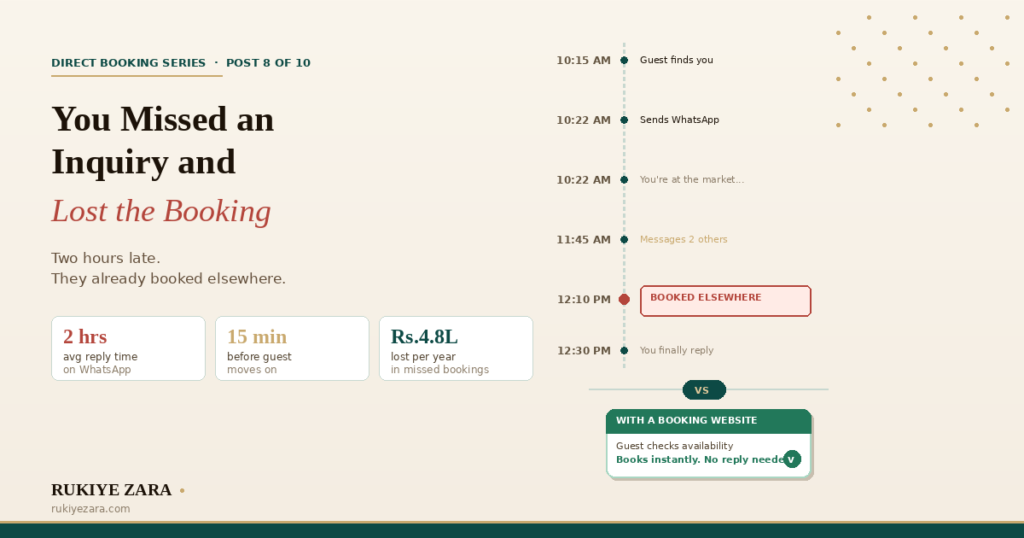
Here’s a scene that happens every week at homestays across India. It might have happened to you yesterday.
That’s ₹20,000+ in revenue — gone. Not because your property was worse or your rate was higher. Because someone else replied first.
This happens more than you think
Most homestay hosts don’t track missed inquiries because they never see them. The guest who messaged you and got no reply within an hour doesn’t message back to complain — they simply book elsewhere. You never know the booking existed.
But think about your own week. How many times did you see a WhatsApp message hours after it arrived? How many Airbnb messages came in while you were hosting guests, cooking, or driving? Every one of those late replies is a potential lost booking.
If you’re the third property to reply, you’re competing against two hosts who already have the guest’s attention. If you’re the second, you need to be meaningfully better or cheaper. If you’re first — and you can show availability and price instantly — you get the booking most of the time.
Why being “always available” isn’t the answer
The obvious solution seems to be: reply faster. Check your phone constantly. Set notification alerts for every channel. Some hosts do this — and it works, until it doesn’t.
You can’t reply while you’re driving guests from the station. You can’t reply while you’re sorting a plumbing issue at 7 AM. You can’t reply during dinner, during checkout chaos, during the one hour a day you take for yourself. And you definitely can’t reply at 11:30 PM when someone in a different time zone is planning their trip.
Being “always available” is a burnout strategy, not a booking strategy. The goal isn’t to reply faster — it’s to make your reply less necessary.
What the guest actually wants
When a guest sends “Is your sea-view room available Dec 20-22? What’s the rate?” — they’re not looking for a conversation. They want two pieces of information: is it available, and how much does it cost. If they could get both answers instantly, they wouldn’t need to message you at all.
“Is it available?” → They want a live calendar showing open dates.
“What’s the rate?” → They want pricing visible on the page.
“Can I book for two nights?” → They want a booking form they can submit right now.
“Do you have photos of the room?” → They want a gallery on your property page.
Every one of these questions gets answered automatically by a booking website — no reply needed from you.
The guest who finds your booking website at 11:30 PM can check availability for their dates, see the rate, scroll through photos, and book — all without you being awake. By the time you wake up, there’s a confirmed booking in your dashboard instead of an unanswered WhatsApp message.
The Airbnb problem: response rate and ranking
If you’re on Airbnb, the missed inquiry problem is even worse. Airbnb tracks your response rate — and if it drops below 90%, your listing gets penalised in search results. You lose visibility, which means fewer new guests find you, which means fewer bookings even beyond the one you missed.
Airbnb expects you to respond within 24 hours to maintain your response rate, and quick replies boost your ranking. But responding quickly on Airbnb only puts you back in the conversation — the guest still has to go through the Airbnb booking flow, and they might be comparing your reply to three other hosts who replied simultaneously.
With your own booking website, there’s no “response rate” to maintain. The website is the response. It’s available 24/7, it never takes a lunch break, and it gives the guest everything they need to decide and book in one visit.
How to stop losing bookings to slow replies
Set up a booking website with live availability
This is the single most impactful change. When your rates and availability are visible online, guests don’t need to message you to get basic information. They check, they decide, they book. The inquiry that used to take two hours of back-and-forth becomes a two-minute self-service booking. Your Starter plan is free — set it up once, and it works while you sleep.
Put your booking link in your WhatsApp auto-reply
You’ll still get WhatsApp inquiries — some guests prefer to message first. Set up an auto-reply: “Thanks for reaching out! Check availability and book here: [your booking link]. I’ll respond personally as soon as I can.” The guest gets an instant answer even when you can’t reply, and many will click through and book without waiting for you.
Add your booking link to every touchpoint
Your Instagram bio, your Google Maps listing, your WhatsApp business profile, your email signature. Anywhere a potential guest might find you, the booking link should be one tap away. The fewer steps between “I like this place” and “I can see if it’s available,” the fewer inquiries you lose.
Use a channel manager to keep availability accurate
Nothing is worse than a guest booking dates that are already taken. If you’re listed on Airbnb and your own website, a channel manager syncs your calendar across both. When someone books on Airbnb, your website shows those dates as unavailable — and vice versa. No double bookings, no awkward cancellations, no manual calendar updates.
The math on missed bookings
Let’s be conservative. Say you miss one booking inquiry every two weeks — a guest who messages you and books elsewhere because you didn’t reply in time. That’s 2 missed bookings a month.
At an average booking value of ₹10,000 per night and an average stay of 2 nights, that’s ₹40,000 a month in revenue you never saw. ₹4,80,000 a year. And that’s counting only the inquiries you noticed — the ones on WhatsApp and Airbnb. It doesn’t count the guests who found your Instagram, couldn’t find a way to book, and moved on without ever messaging you.
Against that, a booking website costs nothing (Starter plan) or ₹999/month (Growth plan with channel manager). Even one recovered booking a month makes it the most obvious investment in your business.
The shift in your role
Without a booking website, you’re a receptionist. Every potential guest has to go through you before they can book. You are the bottleneck — and when you’re busy, bookings slip through.
With a booking website, you’re a host. Guests arrive already booked, already informed, already excited. You spend your energy on the experience, not on answering “is it available?” for the fifteenth time this week.
The commission savings are a bonus. The real value is that you stop trading your time for bookings — and start getting booked while you live your life.
Your next inquiry shouldn’t depend on your reply speed
Set up your booking website so guests can find availability, see rates, and book — even when you’re offline. The Starter plan is free.
Launch your booking website →Frequently asked questions
Will a booking website replace WhatsApp inquiries entirely?
What if I like talking to guests before they book?
How do I handle inquiries for dates that aren’t available?
What’s a channel manager, and do I need one?
I’m a solo host — can I realistically manage a booking website on top of everything else?
Does a slow Airbnb response rate really hurt my listings?
- Guest wants to pay on UPI/WhatsApp — should you accept?
- A guest from last year wants the same rate — should you give it?
- Airbnb suspended my listing — now what?
- My Airbnb isn’t making money anymore — what changed?
- How to increase Airbnb bookings in 2026
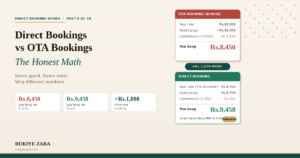
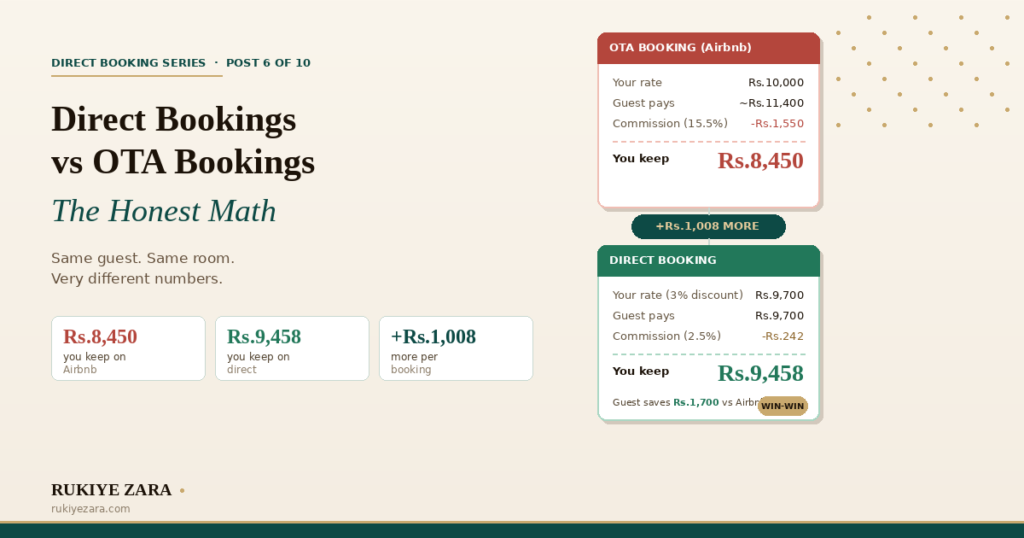
- Direct bookings vs. OTA bookings — the honest math
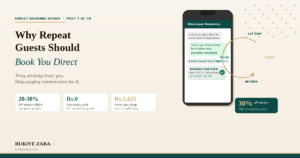
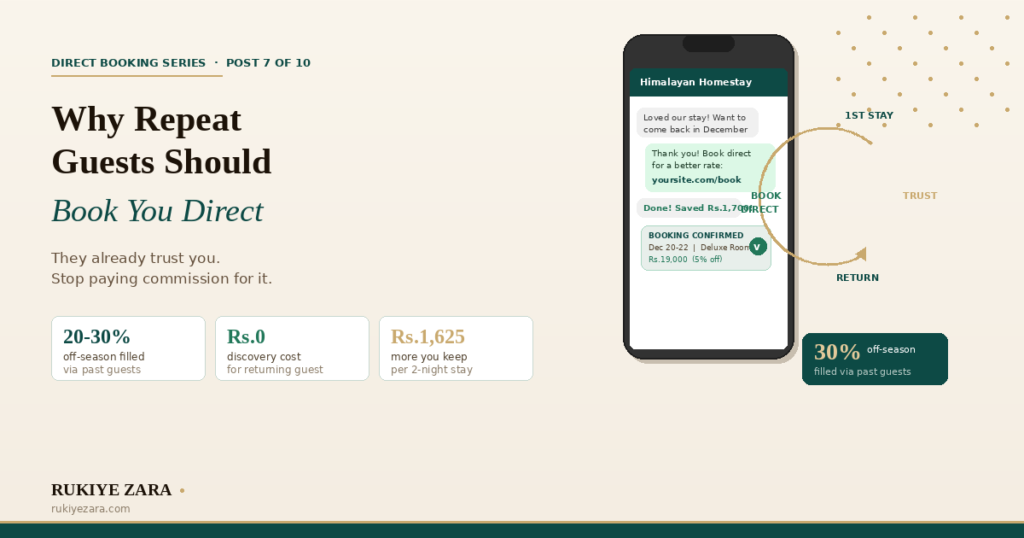
- Why repeat guests should book you direct
- You missed an inquiry and lost the booking (You are here)
- How to start a homestay business in India in 2026
- Can you quit your 9–5 and live off homestay income?
Also read: WhatsApp booking system for your homestay · How to get direct bookings for your homestay